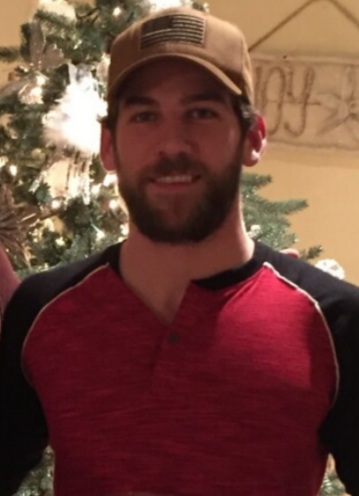
On August 10th, 2020, Ryan Normoyle of Closter, New Jersey, went missing after renting a boat alone on Lake Tahoe. Despite extensive efforts by multiple local agencies, Ryan could not be located. Seeking answers, Ryan’s family reached out to Bruce’s Legacy to see if our specialized underwater search capabilities could provide the breakthrough they needed.
Data-Driven Search
Our first step was collaborating with the South Lake Tahoe Police Department, the lead investigative agency. The breakthrough in the case came from Ryan’s own phone; he had enabled Google Location History, which provided a digital trail of his path on the water. Without this critical data, finding a starting point in a lake as vast as Tahoe would have been nearly impossible.
Technical Challenges & Collaboration
The primary obstacle was the depth. The area of interest sat in the deepest part of Lake Tahoe, reaching depths of 1,500 to 1,600 feet. Because our standard equipment was not rated for these extreme pressures, we relied on a massive collaborative effort:
- Douglas & Washoe County: Provided access to their Outland Technology ROVs (Remotely Operated Vehicles), which are rated for high-depth environments.
- South Lake Tahoe Police: Provided a boat and crew for the duration of the search.
- UC Davis: Randy Malm of the Washoe Sheriff’s Hasty Team coordinated with the University of California Davis to deploy an AUV (Autonomous Underwater Vehicle) to run high-resolution sonar grids.
- Volunteers: Ken Gracey, an experienced search organizer, traveled to Tahoe to assist with logistics.
The Search Operation
I arrived at Lake Tahoe on September 23rd. After days of initial sonar grids by the AUV yielded no results, we began our targeted ROV search.
The First Days: The environment was unforgiving. On the second day, the extreme depth began to take a toll on our electronics. With over 1,700 feet of cable deployed, it felt like pulling a 400-pound anchor by hand. Despite losing drive-power to the ROV, we remained on the bottom, using the sonar to “troll” a search grid. After hours of painstaking work, we captured a perfect sonar image of a body at 1,540 feet. Miraculously, the ROV regained power long enough for me to maneuver the camera and confirm it was Ryan at 1,551 feet. However, due to mechanical strain, we were unable to bring him to the surface that day.
The Final Push: By the fourth day, conditions had worsened with 2-3 foot waves and high winds. I spent the early morning hours cannibalizing parts from two broken ROVs to create one functional unit. I rigged a custom cinch using one-inch webbing and reinforced the ROV’s manipulator arm with zip ties to increase its grip.
Under the looming threat of the weather and with this being our final day of the mission, everything finally aligned. We located Ryan again at 1,565 feet. Our initial plan with a strap failed, but our “Plan B”—a reinforced grip—held steady. We brought Ryan up to 580 feet before he slipped, but the team refused to abort. We descended one last time, successfully secured the custom cinch around his arm near the elbow, and began the two-hour process of pulling the cable hand over hand to the surface.
Mission Accomplished
This recovery was a testament to the power of cooperation. Bringing Ryan home to his family required the seamless integration of law enforcement agencies, university researchers, and dedicated volunteers. It takes a unique level of commitment to work at these depths, and we are profoundly grateful to everyone who stepped up to ensure Ryan was not left behind.
Our heartfelt condolences go out to Ryan’s family and friends.
Special thanks to:
Our search crew – Ken Gracey, Matt Morrison, Heather Carlquist, Barry Rider and Ron Skibinski. South Lake Police Department, Douglas County Sheriff’s Department, Washoe County Sheriff’s Hasty Team, UC Davis, South Lake Fire Department, US Coast Guard, Sean Mayfield of Outland Technology and Beth Darst. Thank You!

